Your Financial GPS
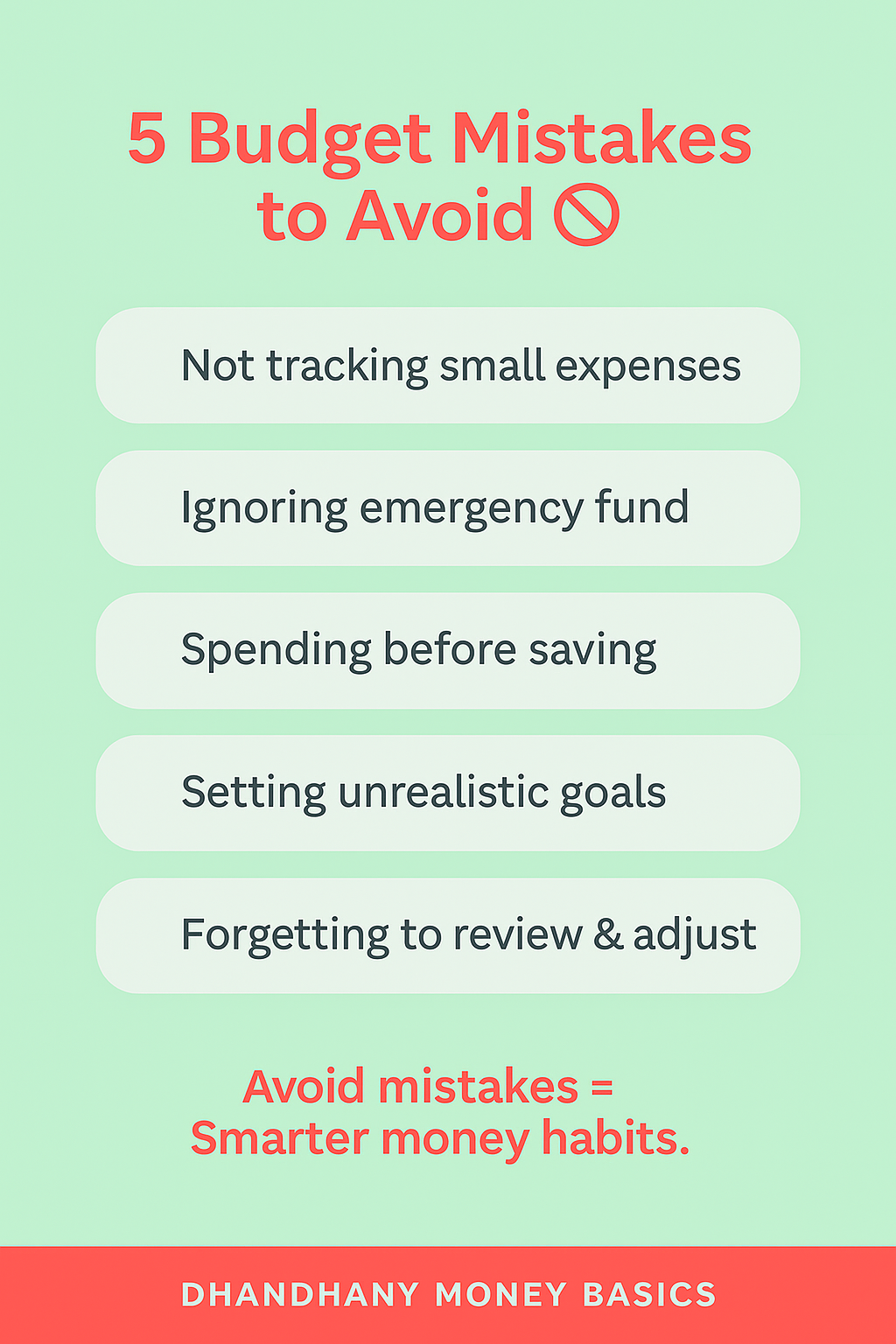
A budget isn't about restriction; it's about permission. It's a plan that ensures you direct your money toward your goals instead of wondering where it went.
⚖️ 1. Needs vs. Wants
Concept: Needs are essentials (rent, food). Wants are nice-to-haves (dining out).
Action: Label every expense to see where your money really goes.
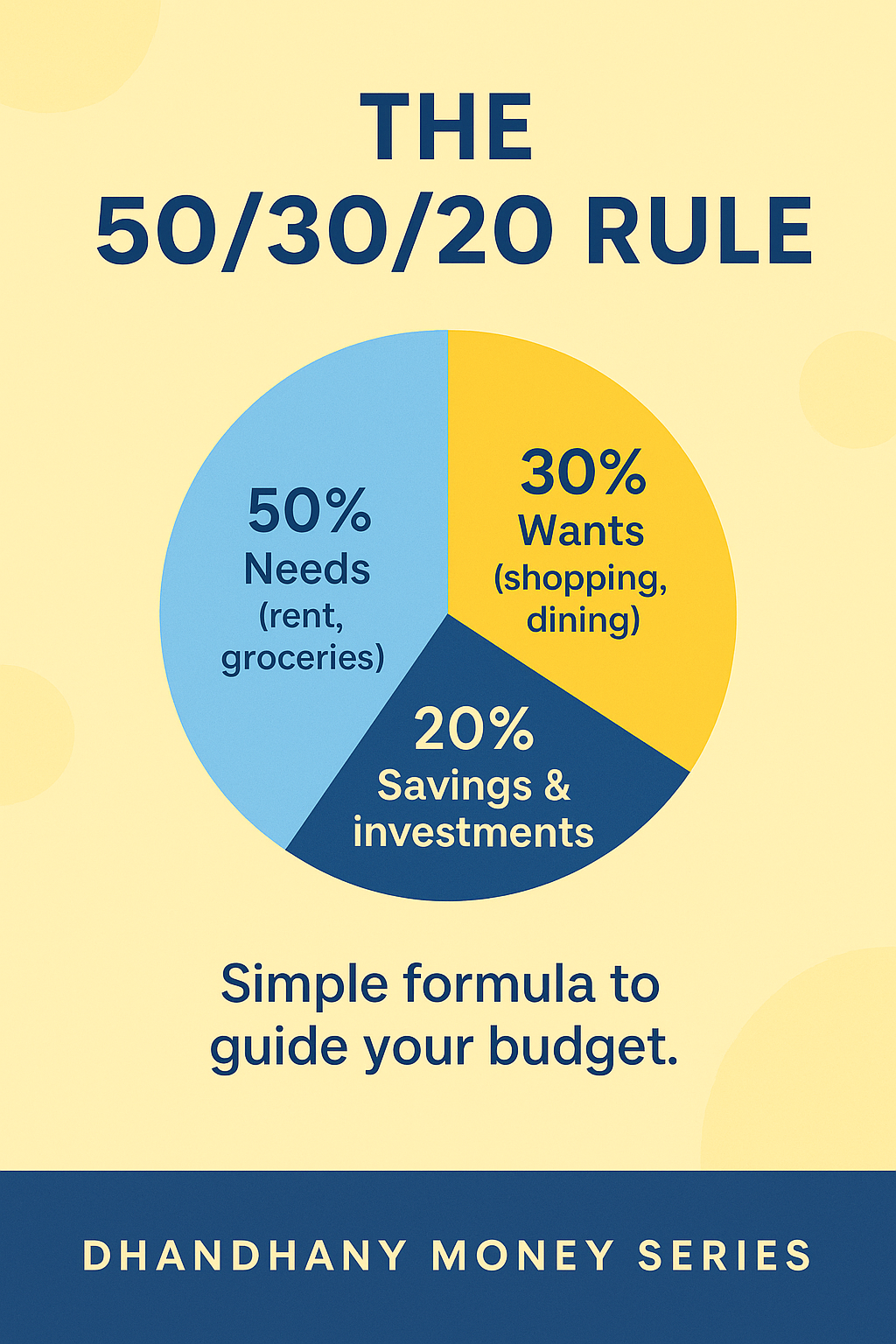
🍰 2. The 50/30/20 Rule
Rule: 50% Needs, 30% Wants, 20% Savings/Debt Repayment.
Action: Use this as a starting benchmark to balance your life.
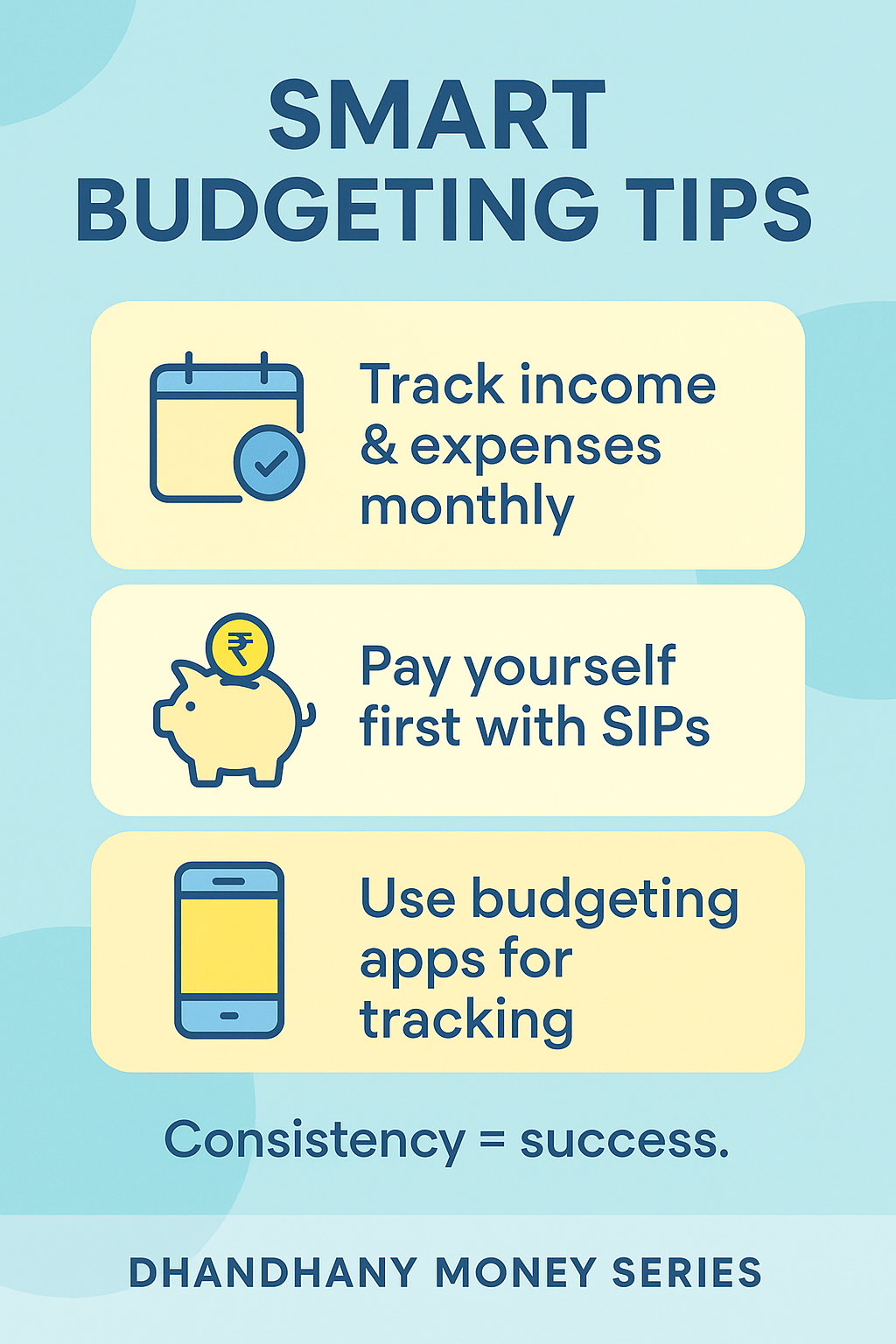
📱 3. Tracking Tools
Concept: You can't manage what you don't measure.
Action: Use an app, Excel sheet, or a simple notebook. Just start.
🔄 4. Review & Adjust
Concept: A budget is a living document, not set in stone.
Action: Check in weekly. Adjust categories if you overspend in one area.
Explainer Video
Watch: How to start budgeting in 5 mins.
Give Every Rupee a Job
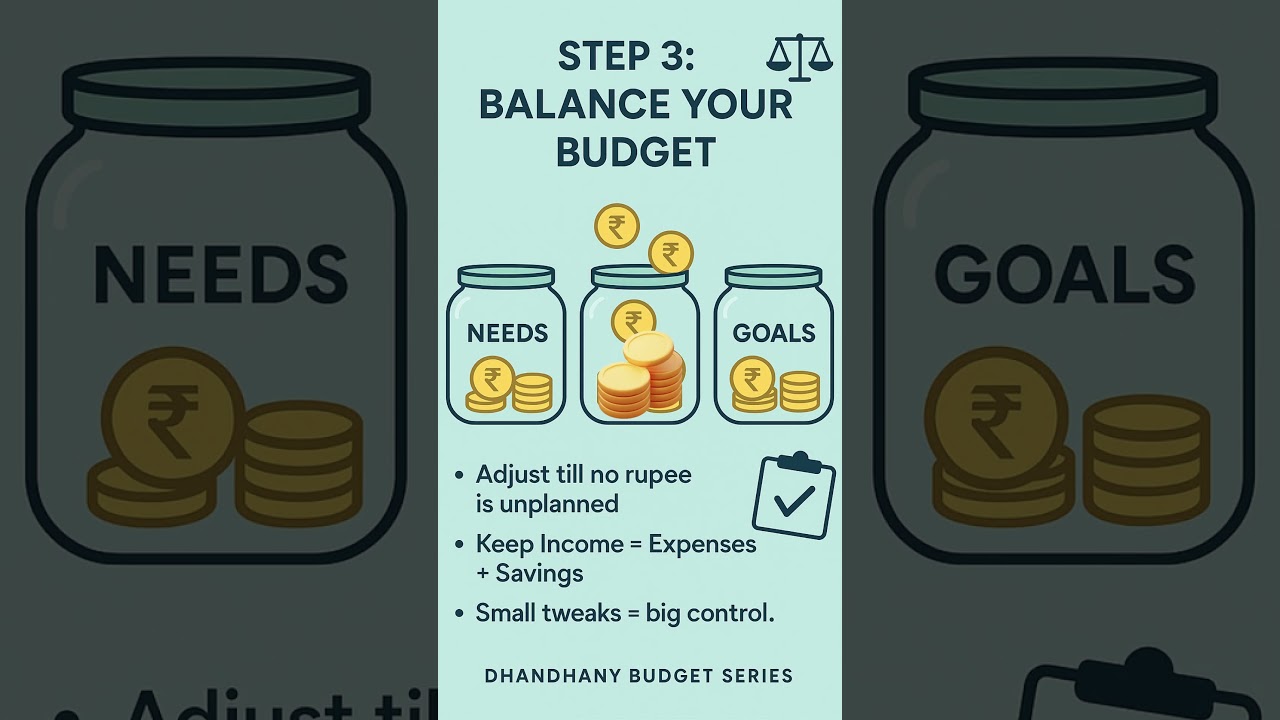
Zero-Based Budgeting (ZBB) is a method where your Income minus Expenses equals Zero. Every rupee gets assigned a specific purpose.
0️⃣ 1. The Principle
Formula: Income - Expenses = 0. No money is left "floating".
Goal: Assign every rupee to bills, savings, or fun BEFORE the month starts.
🎯 2. Intentionality
Why it works: It forces you to be intentional. You can spend guilt-free because it's planned.
Benefit: Stops "mystery spending" where money disappears.
⚡ 3. Handling Variables
Challenge: Income or bills fluctuate.
Solution: Use last month's average for variable bills. Adjust mid-month if needed.
🏦 4. The "Sinking Fund"
Concept: Save small amounts monthly for big annual bills (like insurance).
Benefit: Avoids panic when a large annual payment is due.
Explainer Video
Watch: Master your money with Zero-Based Budgeting.
Your Financial Safety Net
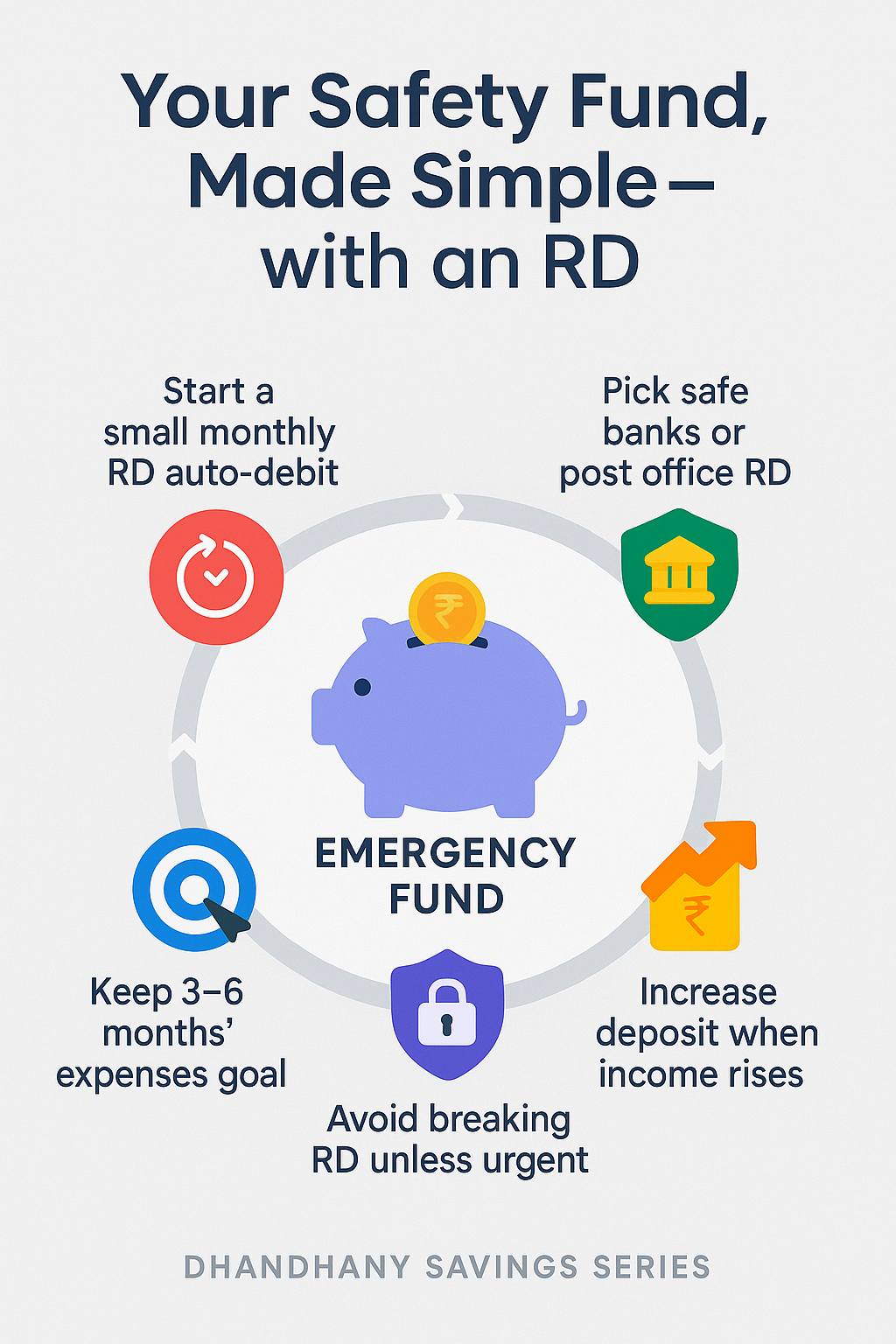
Life is unpredictable. An emergency fund is money set aside specifically for life’s unexpected events so you don't have to borrow to survive.
🛡️ 1. What is it?
Definition: A cash reserve for unplanned expenses.
Examples: Job loss, medical emergency, sudden car repair.
💰 2. How Much?
Rule of Thumb: 3 to 6 months of essential living expenses.
Calculation: (Rent + Food + Bills + EMI) x 6.
📍 3. Where to Keep It?
Criteria: Must be safe and instantly accessible (liquid).
Best Options: Savings Account or Liquid Mutual Funds.
🚫 4. What it is NOT for
Not for: Buying a new phone, vacations, or investments.
Discipline: Only touch it when it's a true emergency.
Infographic
Explainer Video
Watch: Why you need an Emergency Fund ASAP.
Know Your Financial Personality
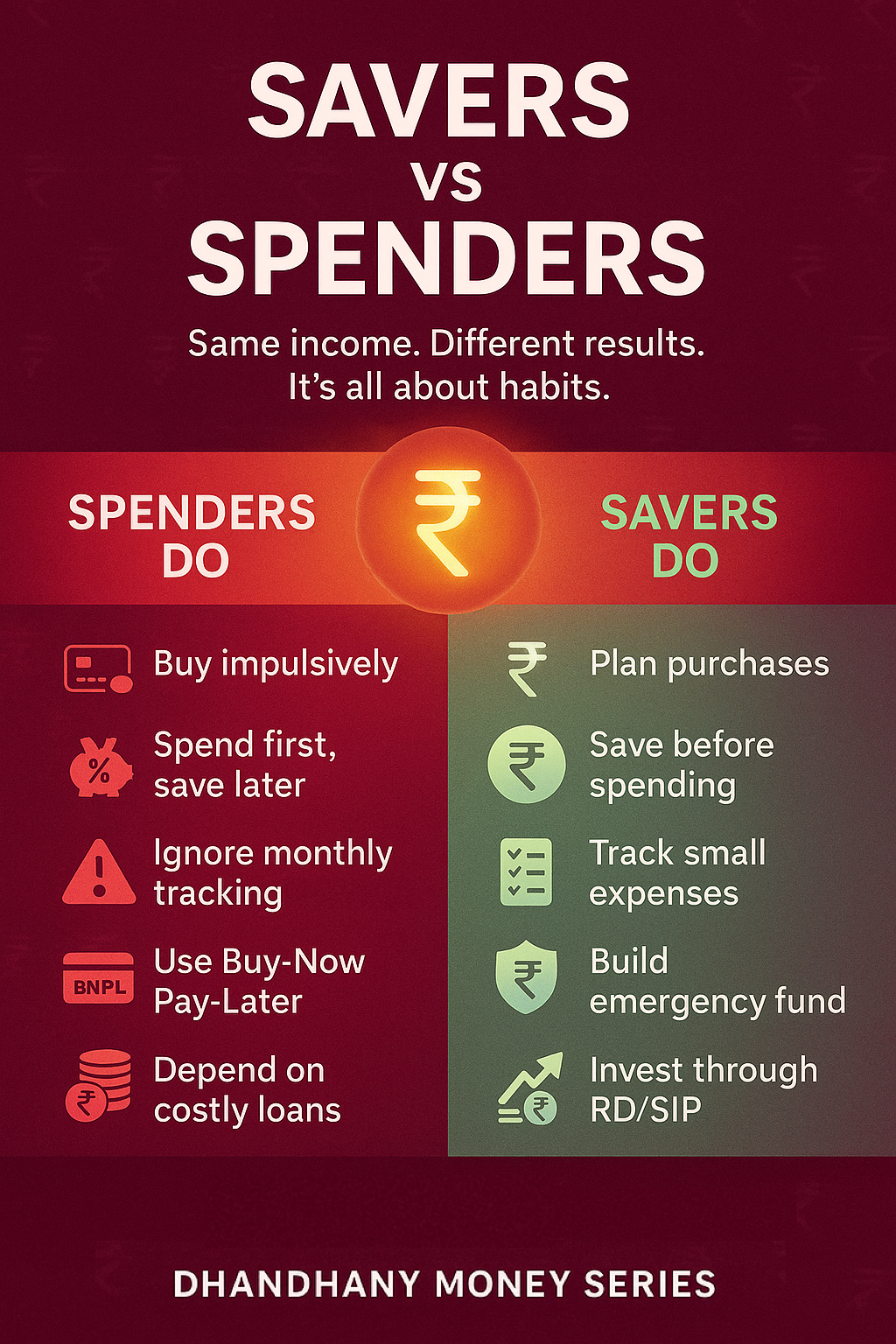
We are all wired differently. Understanding if you are a Saver or a Spender helps you build habits that stick.
🐿️ 1. The Saver
Traits: Loves security, hates waste, gets a high from seeing balances grow.
Challenge: Can be too fearful to enjoy life or invest for growth.
🛍️ 2. The Spender
Traits: Loves experiences, generous, sees money as a tool for enjoyment.
Challenge: Often lacks an emergency fund and prone to impulse buys.
⚖️ 3. Finding Balance
For Savers: Create a "Fun Budget" you MUST spend.
For Spenders: Automate savings so money is gone before you see it.
👫 4. Managing Big Expenses
Concept: Big Expenses are often attractive.
Action: Set a "discussion limit"—any purchase over ₹5,000 needs a chat.
Explainer Video
Watch: Why you spend the way you do.
A Real Story of Change
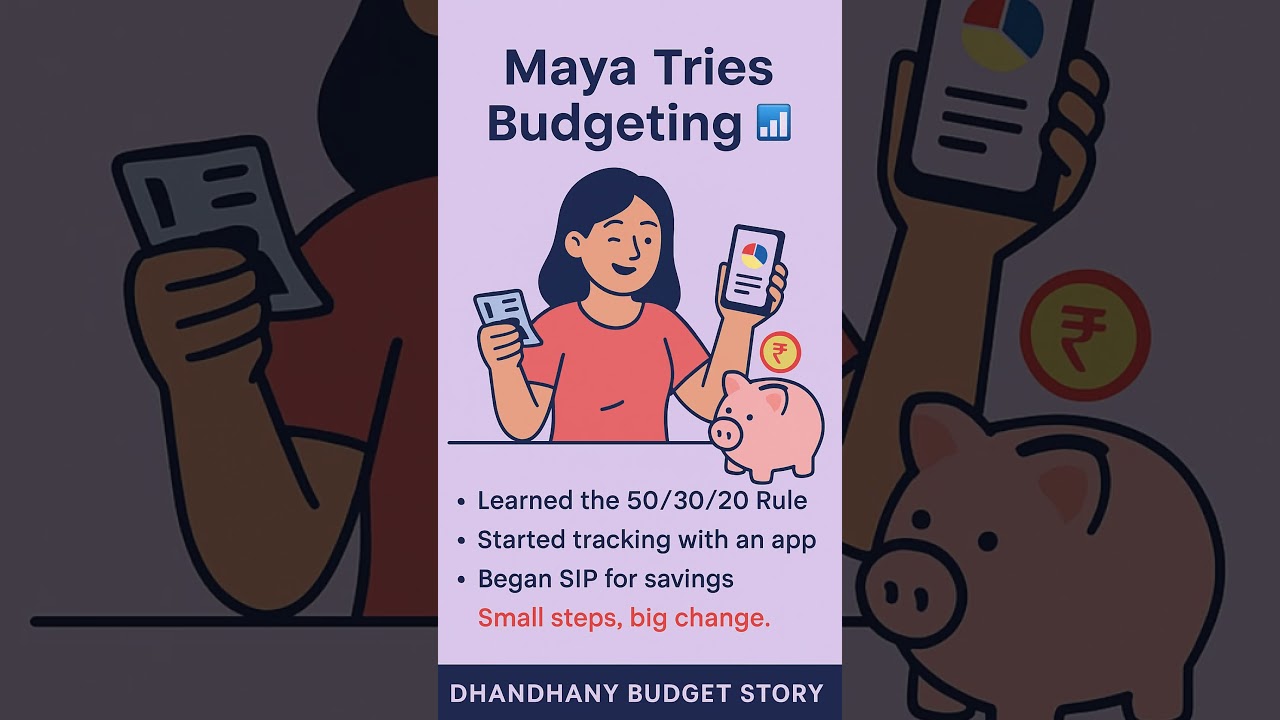
Meet Maya, who went from living paycheck-to-paycheck to building real wealth using these budgeting principles.
🌧️ 1. The Struggle
Situation: Irregular income, ₹50k credit card debt, no savings.
Feeling: Anxious every time the rent was due.
🛑 2. The Wake-Up Call
Trigger: Her laptop broke, and she had no money to fix it.
Action: Started tracking expenses that very night.
📉 3. The Method
Strategy: Used the 50/30/20 rule. Cut dining out by 50%.
Key Move: Created an "Emergency Fund" for future emergencies.
🎉 4. The Result
Outcome: Debt-free in 18 months. 3 months of expenses saved.
Now: Investing for her first home.
Explainer Video
Watch: How Maya cleared her debt.